





All ages
Explore how AUVIE grows with your child.
Choose an age group to see how lessons, stories and games change as your child does. The same characters grow up alongside them.
AUVIE helps children and teens ages 4–18 practise skills they can use every day, like asking for a break when a room gets too loud, figuring out what to say to a friend or getting ready for school one step at a time. Through lessons, stories and games designed for their age, your child can make a choice, see what happens and try again at their own pace.
You don’t need a diagnosis or a particular label to find support in AUVIE.
The IEP meeting. The therapy questions. The research rabbit hole. Your own exhaustion. Your space is built for those moments, with articles and guided workbooks written for you, a private journal, and room to notice your own mood and stress.
Plan everyday life, find local support and keep your Care Circle connected.
Who AUVIE is forAll ages
Choose an age group to see how lessons, stories and games change as your child does. The same characters grow up alongside them.

Ages 4–7
Help your child explore feelings, notice body signals and practise asking for help. Picture-led stories, read-aloud lessons and playful choices give you a way to start those conversations together.



Ages 8–10
Children practise helping at home, setting boundaries and making choices about online safety through stories, games and guided activities.





Ages 11–13
Comics, stories and scenarios cover school pressure, changing friendships and boundaries. Your child can consider what they could say or do in each situation.





Ages 14–18
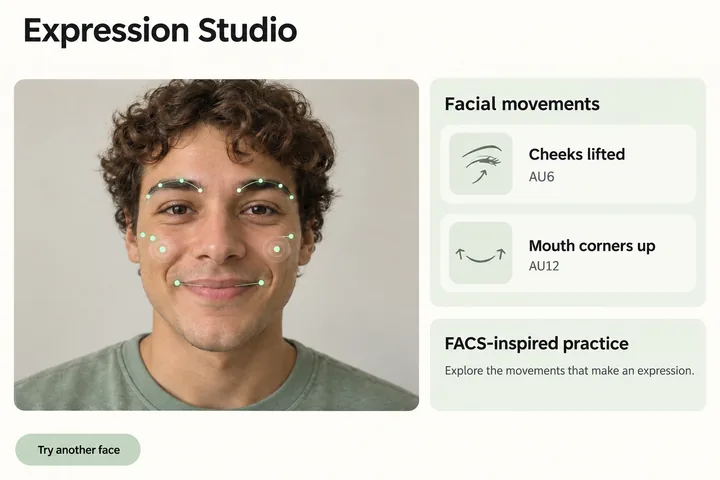
The teen world includes lessons on money, meals, work and difficult conversations. Anime how-tos and realistic scenarios let your teen rehearse everyday skills privately, at their own pace.
For the whole family
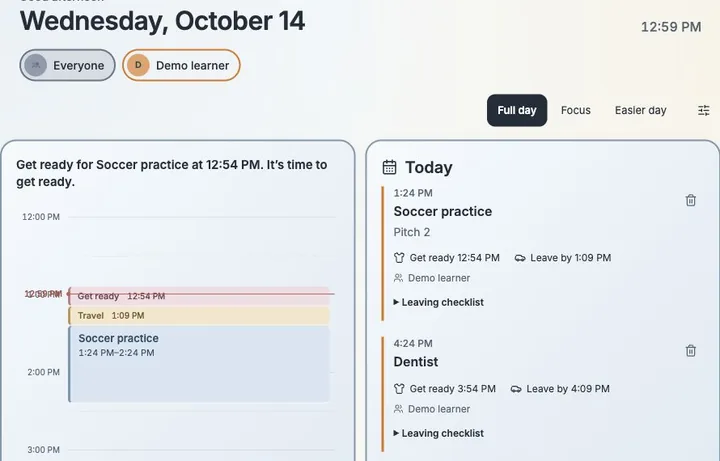
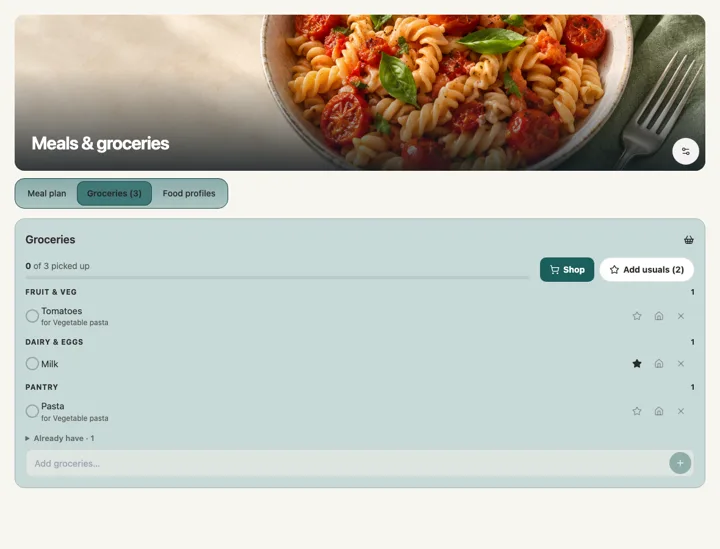
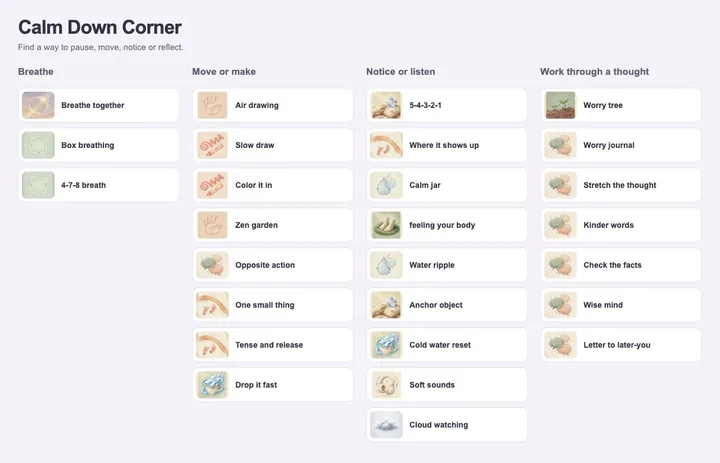
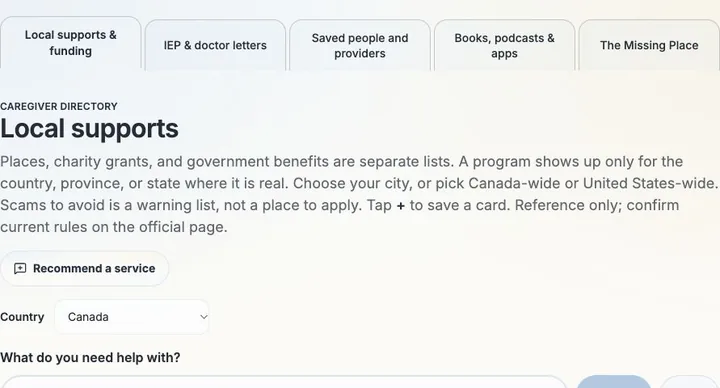
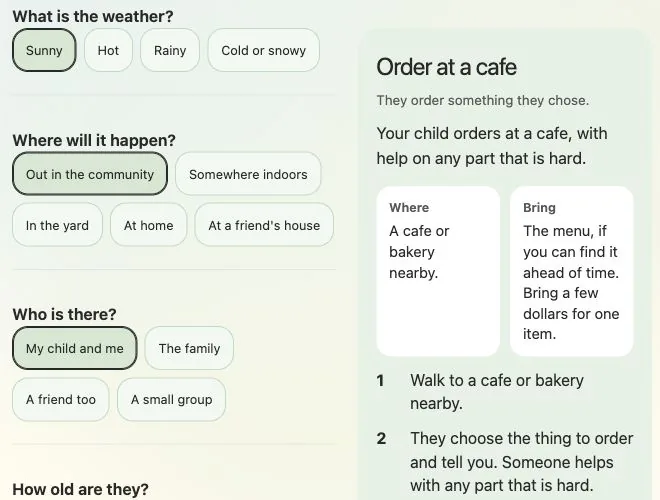
Day plans, meals and groceries, a family calendar, calm-down activities and local resources, with a journal and AUVIE Insight for you. Use the arrows to see each one.
Educators, writers and health professionals contribute to AUVIE’s lessons, articles and caregiver videos. Here’s how each person is involved.

Founder of AUVIE
Brings the learning, adult support and family tools together.
Why I built AUVIEPhD, M.Sc.
Contributes to AUVIE’s article library.
BA, MS
Contributes to AUVIE’s article library.
Ed.D., OCPC
Contributes child curriculum and articles.
M.S. ECE
Contributes child curriculum and articles.
MD
Contributes to AUVIE’s article library.
PT, DPT, NCPT
Presents caregiver videos.
BA, PGCE (PCET), MA
Contributes child curriculum and articles.
You don’t need a diagnosis or a particular label to find support in AUVIE. Whether you’re navigating big feelings, organising everyday life or learning new skills, you can explore stories, games, articles and practical tools for children, teens and adults.
These resources are designed to help people with a wide range of needs, including people with developmental language disorder (DLD), intellectual disability, Down syndrome, fetal alcohol spectrum disorder (FASD), autism, ADHD and other neurotypes. That range of needs shapes AUVIE’s accessibility-focused design, clinical frameworks, breadth of content and Care Circle. Together, these offer different ways to learn, manage everyday life and connect the people who support your family.
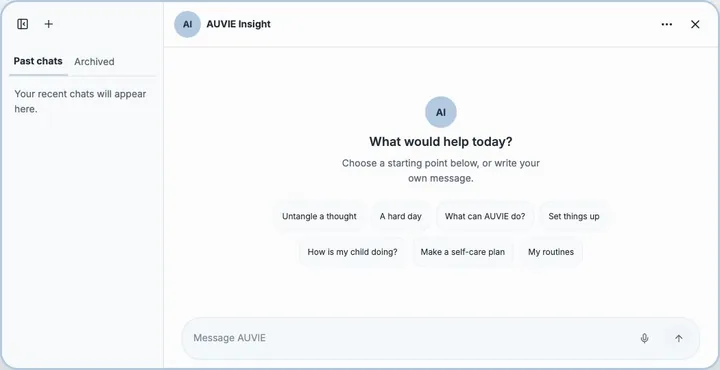
AI support for reports, appointments and planning.
Parents can use optional AI to find information, prepare questions and make plans. Your child’s learning stays human-created. AI does not talk to your child.
Launching April 1, 2027 on the web, iOS and Android in Canada and the US.
We’ll email you when AUVIE access opens.